Showing posts with label Post Process. Show all posts

Wednesday, May 29, 2019

Quain Courtyard pt 2 scan material processing

I had a successful shoot day!
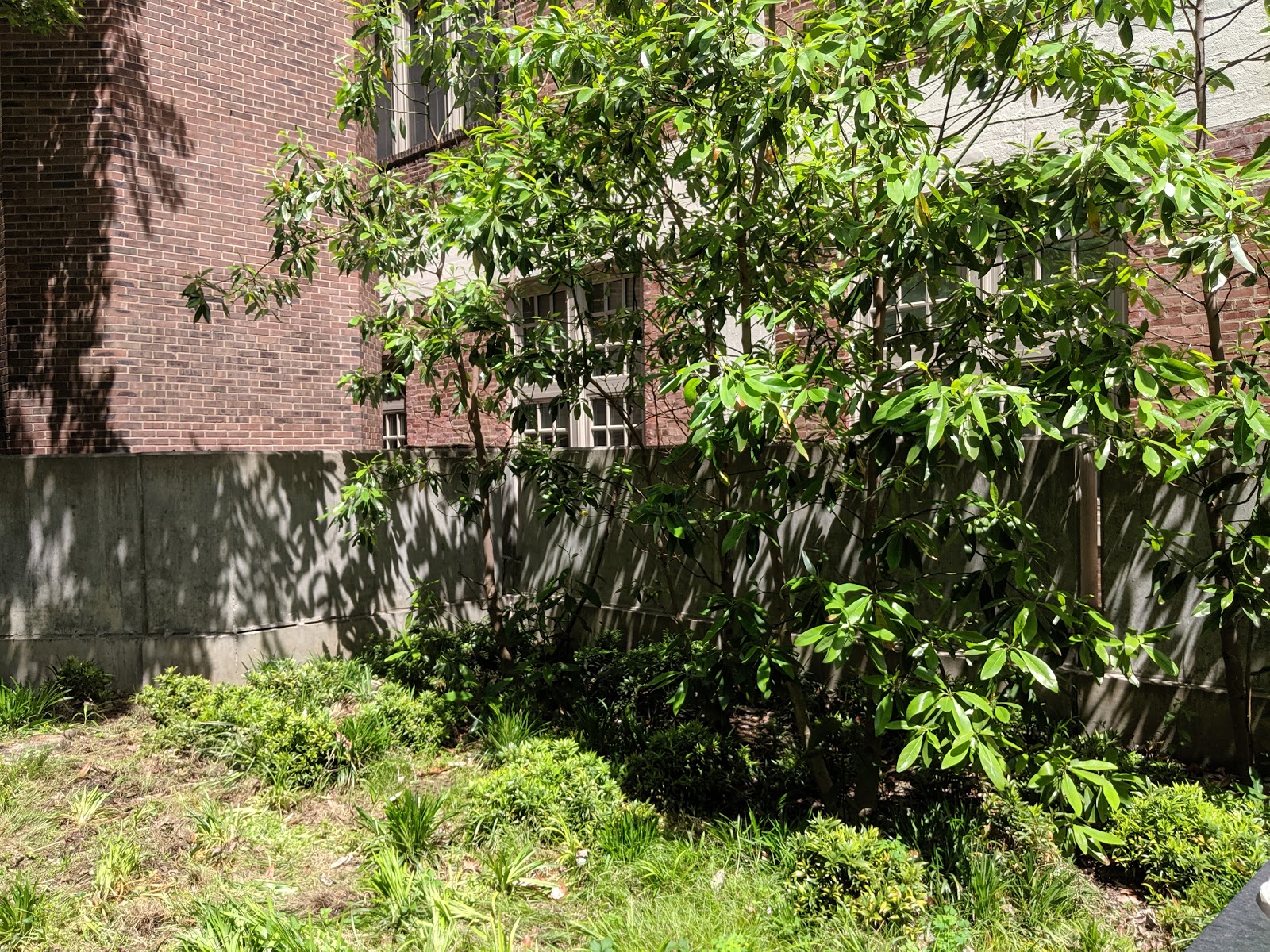
It was rather bright outside, so I had to deal with a lot of harsh sun and directional shadows.
I took a lot of notes as well, and recorded sound.




First I wanna talk about Photoshop's 'Photomerge' function... it's a tool I've been using more lately especially with Alchemist. Its a simple photo stitching feature. Under File>Automate.
It's gotten better than what I remember 5-10 years ago. It keeps all photos on separated layers with masks, and looking at the chunky shapes, the stitching is rather sophisticated.

I would like to, in the future, use a tripod and carefully measure out and scan a large area for material capture. However, I got successful results from just a handful of photos (5-8 or less). I can also repurpose the photogrammetry batches of photos (intended for geo reconstuction).


I was able to make this material kit in about a day. I love Alchemist's "Generate Board" feature, which quick exports your material collection into a thumbnail sheet.


The four slate textures were especially fun... in the courtyard, there are four types of slate tiles. I started with two types of slate, pulled from photos. Then used their "Pavement Generator" to define two types of tile patterns.


There are still some frustrations with this Beta release... it will crash on saving, and is a little slow on my laptop.

Something important to mention was that part of my capture day I took a couple of 'reference photos', wide shots of the area or in general, any photo that documented the qualities of the space and were not intended for reconstruction. These were especially valuable, as it helped inform some of my color choices.

I've been feeling a little overwhelmed about asset generating, but I recently rewatched the Star Wars Battlefront GDC talk. Their level kit contained like, 8 assets. They were simple enough that they could be scaled/rotated and repeated throughout the environment. Quality over quantity! And my favorite quote is still that the experience of going on location was more valuable to the artists than the data itself. It's time we stop making CG art based off of Google Images.

Monday, March 18, 2019

The Cemetery Hill - proof of tech

One thing that I like about working with scanning is that it is easy to work iteratively and BIG to SMALL. It's easy to quickly generate a sparse pointcloud of the entire space (esp with 360 cameras), then refine per object to smaller, denser pointclouds. Then lastly, each asset can be optimized and made beautiful for a realtime environment. 

I feel good about ending out the term with a workflow that makes sense and can show results in just a couple of days. The Cemetery Hill project is just at the beginning, but the proof of tech can already be presented.

Sunday, March 17, 2019

Even more on de-lighting

I wanted to build on my notes from before, to inlcude what I've worked with over the term.

Capture Best Practices

Good input = good output
It helps to shoot subjects on cloudy, overcast days. Or with diffuse lighting.
There is a tradeoff however, sometimes harsh lighting helps generate a better mesh or better surface details.

The stitching software does some amount of color correction. This is all under the hood.

Geometry Dependent Methods

The 'traditional' and more accurate way to delight a base color map would be to totally recreate the lighting conditions, to match all the realworld shadow data, then cancel them out. However, researching other methods has led me to believe that not only is this tedious, it is no longer industry standard.

Image only Methods - stripping light/shadow from base color map

Thursday, February 28, 2019

Pointcloud Meshing with Seperations, pt2


I spent a day building a low poly model for the smoker deck environment. I UV unwrapped everything, then imported everything (as a combined .obj file) into Zephyr. I followed my documented steps from before on reprojecting.
The results? Lots of issues. I am kind of frustrated.


Monday, February 25, 2019

Pointcloud Meshing with Separations, pt1

Something unique to scanning a room scale environment is the process of meshing the pointcloud into separated pieces. I decided to run some tests with re-projection on a smaller object.


In virtual environments it's important to remember that we are building a fictional set, and not an accurate representation of the world. Typically, the background is a skydome. There may be elements on a billboard/card. As objects are closer to the foreground, they require more accurate models and texture details. 

Quain Courtyard pt 4, mild success